
Is Grilled Cheese And Tomato Soup Healthy
We start by defining what “healthy” means for this classic pairing: a balanced mix of nutrients, sensible portions, and ingredients chosen with care. This combo rose to popularity after World War II when institutions served tomato broth alongside the sandwich to boost vitamin C.
Registered dietitians note that tomatoes bring vitamin C, potassium, fiber, and lycopene, while cheese supplies protein and calcium. Calories and saturated fat shift widely depending on choices — a lighter milk-based bowl and simple cheddar will differ from a cream-finished, smoked-cheese version with prosciutto.
Our approach in this recipe post is practical. We recommend canned fire roasted or San Marzano tomatoes for flavor and nutrients, smarter breads, and mindful butter and cheese portions so the sandwich stays satisfying without overpowering the meal.
We’ll offer swaps, method tips like hot blending and proper pan heat, and portion guidance so you can keep the comfort while improving balance for everyday eating.
What we mean by “healthy” for this classic comfort food right now
Here we explain how to make this nostalgic combo more nourishing without losing flavor. By “healthy” we mean a satisfying sandwich plus bowl that delivers key vitamins, more fiber, and reasonable portions of fat, sodium, and refined carbs.
Tomatoes bring vitamin C, potassium, lycopene, and flavonoids. Cheese supplies protein and calcium, so we watch portion size and choose milder, lower-sodium types when possible. Canned fire roasted or San Marzano tomatoes add reliable flavor and texture year-round.
We balance ingredients like whole grain or sourdough bread and use measured olive oil or butter for browning. For the soup finish, whole milk or cream adds richness, while coconut milk offers a dairy-free, silky alternative.
Success means meeting comfort expectations while nudging the meal toward more nutrients. Below is a quick comparison to help guide swaps for your recipe and weekly planning.
| Component | Better option | Why it helps |
|---|---|---|
| Tomato base | Fire roasted or San Marzano | More flavor, fiber from skins, consistent quality |
| Soup finish | Whole milk / coconut milk | Silky texture; dairy-free choice if needed |
| Bread | Whole grain or sourdough | More fiber and better glycemic response |
| Cheese | Moderate portion, lower-sodium | Protein and calcium with less saturated fat |
Is Grilled Cheese And Tomato Soup Healthy
We break down what the plate and bowl deliver nutritionally, and where tweaks help most.
Nutrition upsides
Tomatoes and roasted tomatoes retain skins and provide lycopene, vitamin C, and potassium. Those compounds support heart health and add fiber when skins are left in the pot.
The sandwich brings protein and calcium from cheese, which helps satiety and muscle repair. Pairing these elements creates a meal with vitamins, minerals, and satisfying texture.
Potential downsides
Saturated fat rises with heavy cream and high-fat cheese. Sodium can climb if we use salty cheese, prosciutto, or standard broth.
Smarter swaps
- Use fire roasted or San Marzano tomatoes for flavor and fiber.
- Swap heavy cream for milk or coconut milk to cut saturated fat.
- Choose low-sodium broth or chicken bone broth to boost protein.
- Pick whole grain or sourdough and smaller cheese portions; add basil for brightness.
When this combo fits in a balanced week
One richer serving (~800 kcal) can be balanced by lighter, vegetable-forward meals the next day. Or split the sandwich and make the bowl the main course for a lower-calorie option.
| Choice | Typical effect | How to adjust |
|---|---|---|
| Heavy cream | Higher saturated fat (~+150 kcal) | Use milk or coconut milk |
| Standard broth | Lower protein, variable sodium | Use chicken/bone broth, low-sodium option |
| White bread | Less fiber, quicker carbs | Choose whole grain or sourdough |
Ingredients we’ll use for a better-for-you tomato soup and grilled cheese
These are the key components we choose when building a lighter, flavor-forward tomato bowl and melty sandwich. Below we cover pantry staples, fresh aromatics, broth options, and the dairy choices that control richness.
Tomato soup essentials
We reach for canned tomatoes two ways: fire roasted for smoky depth and extra fiber from the skins, or San Marzano for a sweet, low-acid base. Start by sautéing onion, garlic, carrot, and celery in a little oil, then add tomato paste, Italian seasoning, a splash of balsamic, and about a cup of broth to set thickness.
Grilled sandwich basics
Pick sturdy bread such as sourdough or whole grain so it won’t fall apart when dipped. Choose cheeses that melt well—sharp cheddar, smoked gouda, provolone, or a softer goat cheese—and consider prosciutto or a smear of fig jam for contrast.
Optional creamy elements
For creaminess we use coconut milk for dairy-free, whole milk for a lighter finish, or heavy cream when we want a truly silky soup. Bone or chicken broth can boost protein; vegetable stock keeps the pot vegetarian.
- Basil to finish for fresh lift
- Measure liquids (about a cup) and adjust after blending
- Use a large pot to simmer and blend safely
| Component | Preferred option | Why |
|---|---|---|
| canned tomatoes | Fire roasted / San Marzano | Flavor depth, fiber or sweetness |
| Broth | Vegetable / Chicken / Bone | Vegetarian choice or added protein |
| Cheese | Sharp cheddar, smoked gouda, goat | Good melt and strong flavor |
Step-by-step: from pot to blender to bowl in about 30-45 minutes
We walk through a clear, timed plan that gets the pot on the stove and the sandwich on the plate in about 30–45 minutes.
Sauté, simmer, and blend safely
Start by heating a tablespoon of oil or butter in a large pot over medium heat. Sauté onions, carrot, and celery until softened and lightly browned—this builds depth in the base.
Add garlic and cook briefly until fragrant. Stir in tomato paste and dried herbs, then pour in canned tomatoes and about a cup of broth. Reduce heat and simmer a few minutes with the lid partially on to manage splatter.
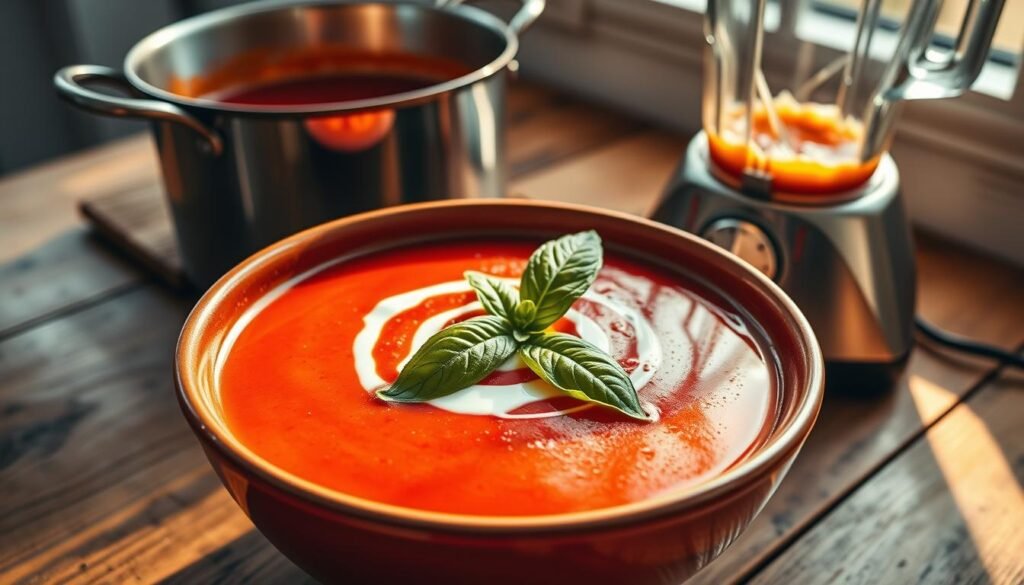
For blending, use an immersion blender on low directly in the pot for easy cleanup. Or transfer small batches to a countertop blender; remove the center cap and cover with a towel to vent steam before you blender blend.
Build a golden, melty sandwich while the soup rests
While the soup cools slightly, butter the outside of each slice of bread fully to encourage even browning. Layer cheese slices or shreds inside and place in a preheated pan over medium to medium-low heat.
Cook 3–4 minutes per side, adjusting heat so the crust turns golden without burning and the center becomes melty. Press lightly with a spatula, flip once, then let the sandwich rest briefly before slicing.
| Step | Timing | Tip |
|---|---|---|
| Sauté aromatics in large pot | 8–10 minutes | Medium heat for even browning |
| Simmer with tomatoes & broth | 10–15 minutes | Lid partially on to control heat |
| Blend and finish | 2–5 minutes | Finish with milk, cream, or coconut milk |
Customize it: dairy-free, higher protein, or fully comfort-forward
Below are practical swaps and additions that let you steer the meal toward dairy-free, protein-rich, or indulgent directions. We keep the changes small so the core comfort remains while matching varied needs and schedules.
Dairy-free and lactose-friendly options
Finish the soup with coconut milk for a silky, dairy-free finish. Use vegan cheese slices or a nut-based melt for the sandwich to keep texture without lactose.
For lactose sensitivity, many tolerate aged, hard cheeses better. A thin layer of hard goat cheese adds tang and fewer lactose issues than fresh soft cheeses.
Protein boosters and lighter swaps
Swap vegetable stock for chicken or bone broth to lift protein and deepen savory notes without much added fat.
Add lean deli turkey or a single slice of prosciutto inside a sandwich to boost protein while keeping portions sensible. Choose 100% whole grain bread and reduce butter to lighten the plate.
Comfort and flavor upgrades
For weekend comfort, finish the pot with a splash of cream and a blend of smoked cheeses for an indulgent pull. For bright notes, stir in fresh tomato basil or fold roasted tomatoes into the pot before blending.
- Use coconut milk or vegan cheese for dairy-free needs.
- Choose chicken broth or prosciutto for extra protein.
- Switch to whole grain bread and use less butter to make it lighter.
- Try fig jam or smoked cheese for a richer flavor profile.
| Goal | Simple swap | Result |
|---|---|---|
| Dairy-free | Coconut milk + vegan cheese | Silky soup, melty sandwich |
| More protein | Chicken/bone broth + turkey | Higher protein, fuller satiety |
| Light & whole | Whole grain bread, less butter | More fiber, fewer calories |
Nutrition snapshot and portions we recommend
This section gives a clear look at calories, sodium swings, and portioning for one serving.

Typical calories, macros, and sodium considerations per serving
A milk-based fire roasted tomato soup with a classic grilled cheese runs about 650 kcal per serving.
A cream-rich version with smoked cheeses and prosciutto can reach roughly 826 kcal. Sodium can swing from ~990 mg to over 1,600 mg depending on cheese, broth, bread, and cured meats.
Cheese supplies most protein and fat; the bowl delivers carbs, fiber, and micronutrients from tomatoes and vegetables. Swapping to bone or chicken broth raises protein without much added fat.
Portioning tips: soup serving sizes and sandwich splits
Aim for 1½–2½ cup of soup per person depending on appetite and the rest of the meal. Pair a full sandwich for a hearty serving or a half sandwich when you want more vegetables and less fat.
- Use thinner cheese slices or a strongly flavored cheese to cut quantity while keeping satisfaction.
- Finish bowls with a sprinkle of basil or a small drizzle of olive oil instead of extra salt.
- Plan leftovers for the next days to avoid higher-sodium takeout choices.
| Choice | Effect | How to adjust |
|---|---|---|
| Milk-based recipe | ~650 kcal; moderate sodium | Keep low-sodium broth |
| Cream-rich with prosciutto | ~826 kcal; higher sodium | Use smaller sandwich portions |
| Bone/chicken broth | More protein | Boosts satiety without much fat |
Make-ahead, storage, and reheating tips that preserve flavor
We plan storage so flavor holds up across fridge days and busy weeks. Follow simple steps to keep the pot bright and the sandwich textured.
Fridge and freezer guidance for tomato soup
Store cooled soup in an airtight container in the fridge for 3–5 days. For longer use, freeze portions up to 3 months.
Thaw frozen portions overnight in the fridge before reheating. Leave a little headspace in containers to allow for expansion.
Portion into single servings to speed reheating and reduce waste. Label containers with dates so we track fridge days easily.
Reheating grilled cheese so it stays crisp and melty
Leftover grilled cheese keeps well for up to 3 days in the fridge when wrapped. It does not freeze well.
To reheat, place sandwiches on a baking tray, cover with foil, and bake at 350°F for about 6–7 minutes until cheese is melty. This retains a crisper exterior than the microwave.
If microwaving is unavoidable, warm briefly then crisp in a hot skillet for best texture.
| Item | Storage | Reheat method |
|---|---|---|
| tomato soup | Fridge: 3–5 days; Freeze: up to 3 months | Low heat on stove; whisk after warming |
| single portions | Fridge days: quick reheat; less waste | Reheat 5–8 minutes on low heat |
| grilled cheese | Fridge: up to 3 days; do not freeze | Bake 6–7 minutes at 350°F on tray, foil-covered |
Tools and techniques that improve texture and flavor
We focus on practical gear and clear steps that lift both the pot and the pan work. Using the right tools helps us get a silky bowl and a crisp, melty sandwich every time.
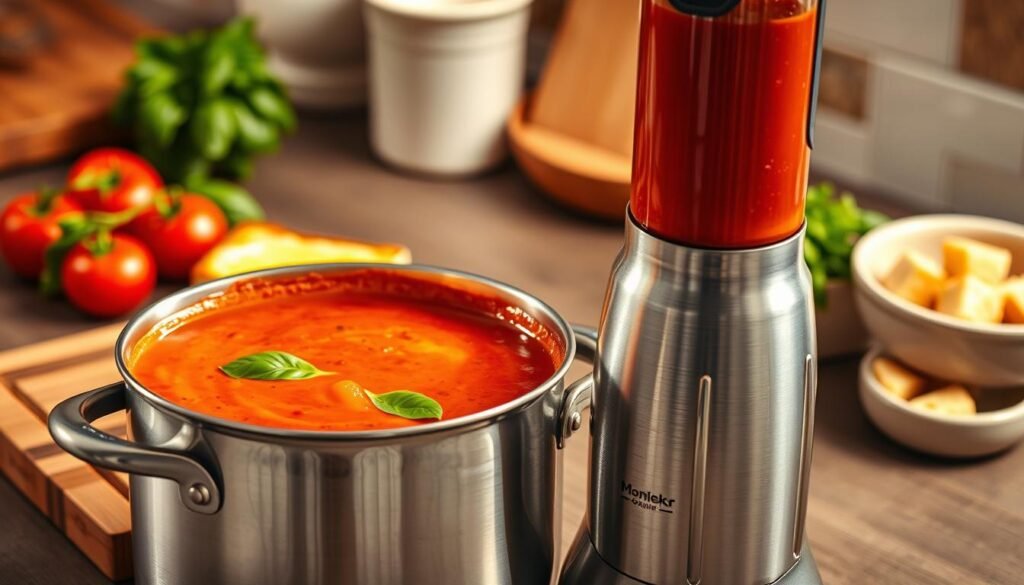
Large pot, blender choices, and safe hot-blending tips
We pick a large pot to sauté onion and other aromatics with room to simmer and blend safely. The extra volume reduces boil-over and gives space when we use a blender.
For texture control, choose between an immersion blender for convenience and a countertop blender for an ultra-smooth result. Start on low speed and blend in small batches to avoid splatter.
When using a countertop blender, remove the center cap and cover the lid with a towel to vent steam. Fill jars halfway, blend briefly, then repeat. This prevents lid blow-offs and keeps hot liquid from spitting.
Bread, butter, and pan heat control for the perfect crust
Butter the outside of each slice edge to edge so browning is even. Use sturdy bread to hold fillings and maintain texture when dipping into the bowl.
Cook over medium to medium-low heat about 3–4 minutes per side. Manage heat so the crust turns golden without scorching before the interior cheese melts.
Caramelize onion gently with a pinch of sugar to add sweetness and bloom tomato paste in the pot to deepen flavor. Finish bowls with a basil top or a drizzle of olive oil for aroma.
| Tool | Use | Benefit |
|---|---|---|
| Large pot | Sauté, simmer, blend-safe | Prevents spills; even cooking volume |
| Immersion blender | Blend in pot on low | Less splatter; quick cleanup |
| Countertop blender | Blend batches with vented lid | Ultra-smooth texture |
| Sturdy pan | Cook sandwich at steady heat | Even crust without burning |
Bring it to the table: our balanced take on comfort food, served today
We present a practical finish: hot soup, a melty sandwich, and a few small touches to lift the plate.
Serve a steaming bowl made from San Marzano or fire roasted tomatoes, finish with a splash of balsamic and basil, then taste for salt and acid so the cheese tomato bowl sings without excess sodium.
Cut the sandwich into 1-inch cubes as crunchy croutons, or pair a half sandwich with a crisp salad for a lighter balance. Blend carefully when hot—vent the lid or use an immersion blender in the pot.
For leftovers, warm the soup over low heat and revive the sandwich in a 350°F oven, covered, for about 6–7 minutes. With mindful ingredients and steady technique, this comfort food fits a balanced week.


