How To Make Mac N Cheese Without Milk
We walk through a reliable weeknight stove method that turns pantry staples into an ultra‑creamy comfort dish. Our approach simmers elbow pasta in seasoned chicken broth, then folds in cubed cream cheese, butter, onion and garlic powders, salt, and pepper for a silky base.
Freshly shredded sharp cheddar finishes the sauce and gives a glossy, smooth texture; we stress this because pre‑shredded blends can stay grainy from anti‑caking agents. Leftovers chill well for about three days and revive with a splash of broth or water over low heat.
We preview easy variations: a slow cooker for hands‑off comfort, a baked version with extra cheddar or breadcrumbs for crunch, and richer swaps like heavy cream, half‑and‑half thickened with a flour slurry, or cream cheese emulsions. These options help you match richness, budget, and flavor with minimal fuss.
Why We Love Mac and Cheese Without Milk Right Now
Lately we reach for a milk-free approach that turns cream cheese and chicken broth into a rich, cozy supper. It saves a trip to the store and still delivers the nostalgic texture we want in a simple weeknight meal.
Boiling pasta in chicken broth seasons each bite from the inside out. Folding in cream cheese, or upgrading with heavy cream or half-and-half, gives stable creaminess even when milk is missing.
We prefer freshly shredded cheese for a silkier melt. Small flavor nudges—Dijon, a pinch of nutmeg, or white cheddar and mozzarella—shift the profile while keeping the classic feel.
- Herbed breadcrumbs with parsley, garlic, and lemon zest add crunch and brightness.
- Swaps and mix-ins—broccoli, bacon, or chicken—make it heartier without extra fuss.
- Leftovers reheat well with a splash of broth, so this recipe is ideal for meal prep.
Essential Ingredients for Creamy, Milk‑Free Mac and Cheese
A few smart choices in fat and seasoning let us get silky sauce from shelf‑stable staples. Below we list pantry ingredients that actually change texture and flavor, not just fill space.
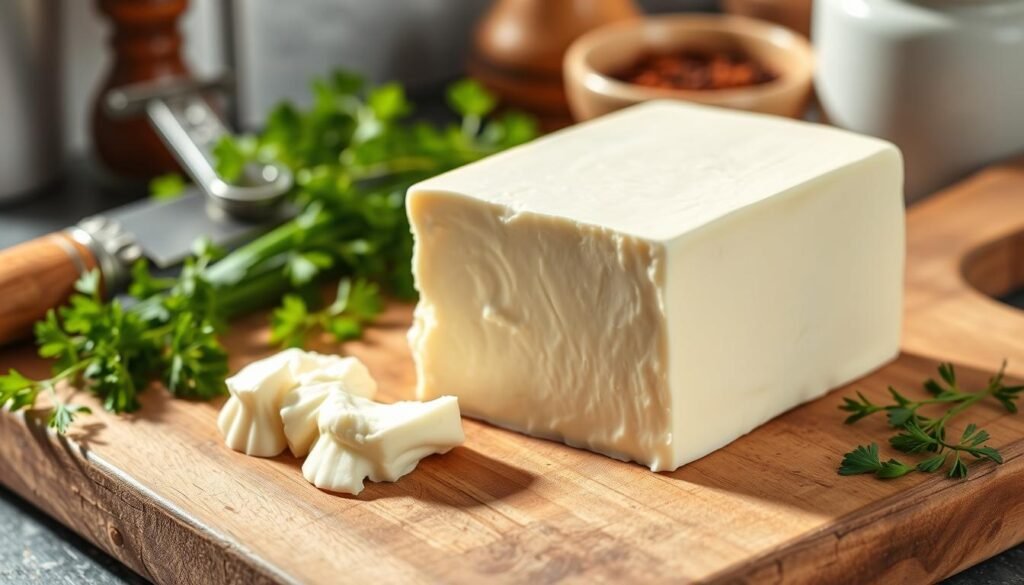
Cream cheese, butter, and sharp cheddar for body
We build richness with cream cheese and butter, then finish with freshly shredded sharp cheddar. Cube the cream cheese and bring it to room temperature so it melts evenly and avoids lumps.
Chicken broth versus water
We prefer low‑sodium chicken broth to cook the pasta; it seasons from the inside out and reduces the need for extra salt. Water works in a pinch, but you’ll likely add more salt later.
Seasoning that matters
Onion powder, garlic powder, and measured salt form a reliable base. A small pinch of mustard powder or a dab of Dijon helps emulsify the mixture. Measure spices with a teaspoon and taste after the cheese melts.
Optional upgrades
Half‑and‑half or heavy cream adds silkiness if desired. We always grate cheddar cheese and any mozzarella ourselves to avoid anti‑caking agents that make the sauce grainy.
Gear Check: The Large Pot and Tools We Rely On
Good tools save time and help us control heat so the sauce melts evenly and the pasta stays tender. We keep cookware and utensils simple but specific. That way we avoid sticking, scorching, or grainy results when we finish the dish.
Core cookware and why it matters
We use a large pot to give pasta room to move and absorb broth without clumping. A roomy pot also helps the pasta cook evenly and maintain texture.
A medium saucepan is reserved for building a stable sauce over moderate heat. There we melt butter, soften aromatics like shallot, and whisk cream cheese or a flour slurry until smooth.
- Box grater or Microplane — we grate cheese fresh for better melt and fewer anti‑caking agents.
- Whisk and silicone spatula — one smooths lumps, the other folds shredded cheese gently and scrapes the pan clean.
- Sturdy pan — for toasting breadcrumbs with butter, garlic, and lemon zest when we bake or finish on the stovetop.
| Tool | Primary use | Quick tip |
|---|---|---|
| Large pot | Boil pasta in broth or water | Choose a heavy‑bottomed pot for steady heat |
| Medium saucepan | Build sauce with butter and cheeses | Use moderate heat to prevent splitting |
| Fine‑mesh strainer | Drain pasta and save starchy water | Reserve pasta water for emulsifying sauce |
We also rely on measuring cups and teaspoons for consistent seasoning. Small steps with proper gear make this recipe repeatable and stress free for weeknight cooking.
Step‑By‑Step: Stovetop Mac and Cheese Without Milk
Our stovetop routine focuses on timing and gentle heat so every bite of pasta holds a smooth, well‑balanced sauce.
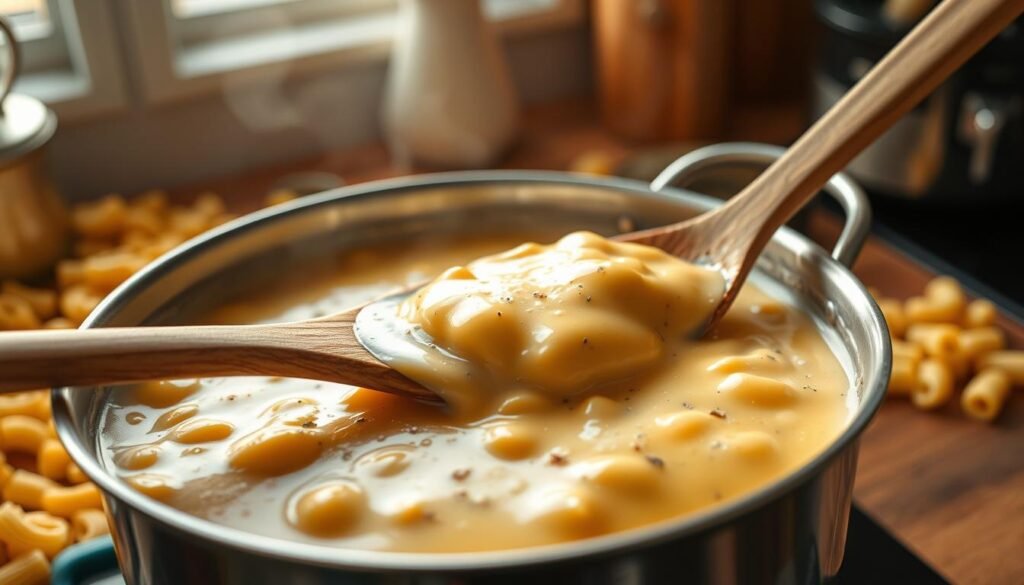
Boil pasta in chicken broth for deeper flavor
Bring chicken broth to a boil in a large pot, then add elbow macaroni and stir. Cook until most liquid is absorbed, leaving about 1/3 cup of broth or water to moisten the pasta.
Build the cheese sauce with cream cheese and butter
Reduce heat to medium‑low once the macaroni is nearly al dente. Add cubed cream cheese and butter in small pieces so they melt evenly.
Stir in onion powder, garlic powder, salt, and pepper until the mixture is mostly homogeneous. Use minutes as cues: smoothing the sauce usually takes 2–4 minutes over gentle heat.
Finish with freshly shredded cheddar for a smooth sauce
Remove the pot from direct heat or keep on low, then fold in freshly shredded sharp cheddar until completely smooth. Whisk briefly if small lumps remain.
If the sauce seems thick, add a splash of warm water or reserved broth. If thin, add a small handful of cheese and stir until it thickens.
Timing cues: heat control and minutes to melt without splitting
- Leave ~1/3 cup liquid so the sauce emulsifies and clings to each piece of pasta.
- Reduce heat at the last minute of cooking to prevent scorching as cheeses melt.
- Melting and smoothing typically require 2–4 minutes of gentle heat; watch for glossy, cohesive sauce.
- For baked versions, transfer to a greased dish and top with extra cheddar or breadcrumbs before broiling briefly.
- Slow cooker option: cook pasta slightly under al dente, combine, then heat on LOW 1.5–2 hours, stirring every 30 minutes.
| Step | Action | Timing cue |
|---|---|---|
| Boil pasta | Cook in chicken broth until most liquid is absorbed | Leave ~1/3 cup; watch for al dente |
| Build sauce | Add cubed cream cheese, butter, and powders | 2–4 minutes on medium‑low to melt |
| Finish | Fold in shredded cheddar off heat | Whisk if needed; glossy sauce ready |
How To Make Mac N Cheese Without Milk: Our Core Method
We rely on two failproof paths that turn pantry staples into a glossy, clingy sauce in one pot. Each route focuses on timing and low heat so the cheese melts evenly and the texture stays smooth.
One-pot broth method (absorb and stir-in)
Simmer macaroni in chicken broth until most liquid is absorbed and pasta sits just shy of al dente. Reduce heat, add cubed cream cheese and butter, then stir in onion and garlic powders and a touch of mustard.
Fold in shredded cheese off heat and check seasoning. If the sauce seems tight, add a splash of reserved water or chicken broth. Let the pot rest 1–2 minutes off heat so the mixture settles and thickens before serving.
Half-and-half plus flour trick for ultra-velvety sauce
Warm half-and-half on low, then whisk a light slurry of flour and chicken broth or water into the cream until it thickens to heavy-cream consistency.
Add shredded cheese gradually, stirring to form a cohesive cheese sauce. Keep heat low to protect the emulsion and avoid graininess. Fold in pasta and finish with butter if you want extra gloss.
- We time the stir-in when broth is mostly absorbed so cheese melts quickly and cleanly.
- Season lightly at first; adjust salt and mustard after the sauce forms.
- Choose the method based on pantry: the slurry gives consistent deli-style texture; the one-pot route is fastest and uses fewer pans.
| Method | Key steps | Best use |
|---|---|---|
| One-pot absorb | Cook macaroni in chicken broth, add cream cheese and butter, fold in shredded cheese | Fast weeknights; fewer dishes |
| Half-and-half + flour trick | Warm cream, whisk in flour+broth slurry, thicken, add cheese, fold pasta | Deli-style texture; more stable sauce |
| Common finish | Low heat for melting, thin with broth or water, rest 1–2 minutes | Protects emulsion and improves cling |
Smart Substitutions When You’re Out of Milk
Practical substitutions let us turn common pantry liquids into a silky, clingy base when milk is missing. We favor swaps that keep texture and flavor steady so the mac still feels rich at the table.
Dairy swaps that still taste indulgent
We pick heavy cream or half‑and‑half when we want maximum silk; use a 1:1 swap or cut with chicken broth to lighten the body. Sour cream or plain yogurt works 1:1 and adds a pleasant tang without breaking the emulsion.
Pantry and plant‑based options
Pasta water (about 1 cup) adds starch and cling but less richness. Oat, almond, soy, or coconut milk swap 1:1; oat and coconut give more body, while almond and soy may need a light flour slurry.
Quick tricks for texture and body
Flour trick: whisk 2 tablespoons flour into 1/2 cup chosen water or broth, add to warm pot, and cook until the sauce thickens. Cream cheese emulsion: beat 4 tablespoons cream cheese with 3/4 cup warm water, then whisk into the pasta for an instant, smooth base.
We correct on the fly: if the sauce runs thin, add about 1/2 cup shredded cheddar; if it’s too thick, splash more cream or broth. Watch fat and seasoning; taste after the cheese melts so final ingredients balance.
Pasta Shapes and Texture Tips
Pasta geometry matters: curves and ridges trap sauce and lift flavor in every forkful. We choose shapes that match the method so the final bowl feels saucy, not dry.
Elbow macaroni, shells, cavatappi, and penne
We use elbow macaroni for classic comfort and consistent sauce coverage. Shells capture pockets of cheese and make each bite more satisfying.
Cavatappi and penne bring ridges and curves that cling to sauce. That texture boosts mouthfeel and makes simple seasoning feel more pronounced.
Al dente timing and why starchy pasta water matters
Aim for al dente—usually one minute less than the package suggests—so pasta finishes in the sauce without turning mushy. Test a piece a few minutes early for the right bite.
Reserve a small cup of starchy pasta water. A ladle of hot water helps emulsify and thin over‑thick sauce so it coats every noodle evenly.
- One‑pot absorb works best with elbow and shells; separate boil then toss suits penne.
- Stir during the first minute to prevent sticking, especially with high‑starch shapes like shells.
| Shape | Benefit | Best use |
|---|---|---|
| Elbow | Even sauce coverage | Classic one‑pot bowls |
| Shells | Pocket for cheese | Baked or saucy servings |
| Penne / Cavatappi | Ridges trap sauce | Tossed with thick sauce |
We test doneness early because minutes vary by brand. A short check saves texture and keeps your mac cheese tasting its best.
Flavor Boosts and Mix‑Ins
We turn a simple bowl into a full meal by folding in a few savory additions. These lift the sauce, add texture, and make the plate more filling without extra fuss.
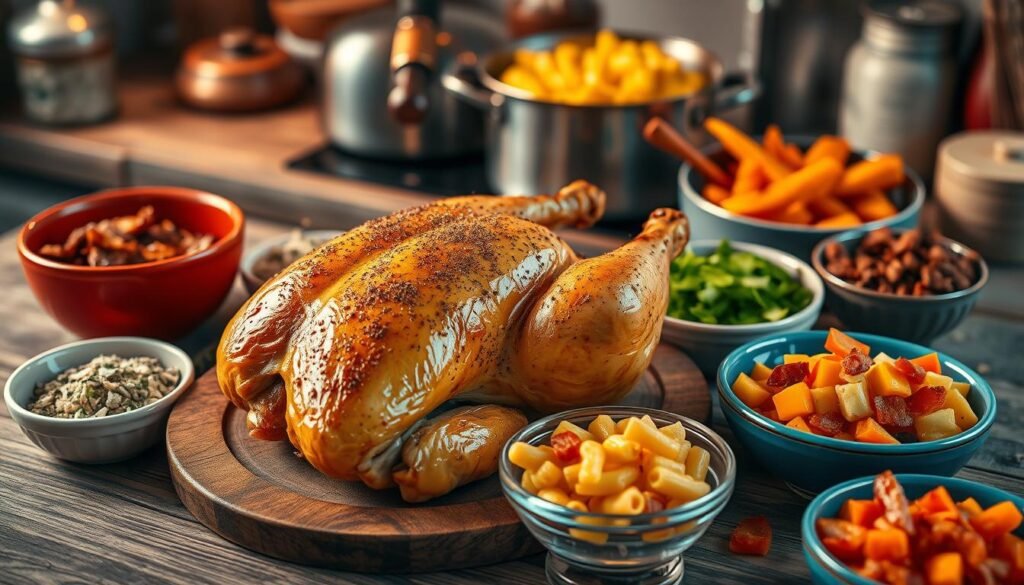
Chicken, bacon, and sautéed veggies
We stir in shredded rotisserie chicken or crisp bacon to add savory depth and protein. The chicken makes the dish heartier while bacon brings salty crunch.
Sautéed broccoli, peppers, or mushrooms add color and bite. Roasted broccoli gives smoky sweetness that pairs well with sharp cheddar cheese.
Mustard, nutmeg, and heat tweaks
A teaspoon of mustard powder or a dab of Dijon sharpens the flavor and helps the sauce emulsify. A pinch of nutmeg warms the mix without overt spice.
For heat, we add a pinch of cayenne, a few chili flakes, or a dash of hot sauce. Adjust seasoning when adding salty mix‑ins so the final balance stays right.
White cheddar and mozzarella for a different profile
We swap sharp cheddar for white cheddar or blend in fresh mozzarella for a creamier pull. That combo softens the bite and creates a stringy, velvety texture.
- Fold proteins and vegetables into a slightly looser sauce so everything finishes creamy.
- Top with panko mixed with melted butter, garlic, parsley, and lemon zest for crunch and brightness.
- Garnish with cracked pepper or chopped chives for a restaurant‑style lift.
| Mix‑in | Impact | Seasoning tip |
|---|---|---|
| Shredded chicken | Makes the dish a main; adds protein | Reduce added salt; finish with pepper |
| Crisp bacon | Umami and crunch | Cut salt elsewhere; add parsley |
| Roasted broccoli | Smoky sweetness and texture | Pair with lemon zest and garlic |
Oven‑Baked and Slow Cooker Variations
Shifting from stove to oven gives the dish a bright, browned top that contrasts the silky interior.
From pot to oven: bubbly top with extra cheddar
We move the finished mac from a large pot into a greased baking dish. Add extra shredded cheddar or a light crumb layer.
Bake in a preheated oven until the cheese melts and the edges are bubbling. Rest 5–10 minutes so the sauce sets before serving.
Breadcrumb topping with parsley, garlic, lemon zest
Toast panko in butter with minced garlic for 2–4 minutes over medium heat until light brown.
Stir in chopped parsley, lemon zest, and a pinch of salt off heat for a fresh crunch that balances rich cheese.
Slow cooker timing and stirring schedule
For hands‑off cooking, combine slightly undercooked macaroni, sauce, and any remaining broth in the slow cooker.
Cook on LOW for 1.5–2 hours, stirring every 30 minutes until the pasta is tender and the cheese melts. Use gentle heat and add a splash of broth if edges dry.
- We use a white cheddar and mozzarella layer for a stretchy, golden crust.
- Watch minutes closely; the goal is melt and browning, not extra pasta cooking.
- Garnish with crumbs right before serving for maximum crunch.
| Method | Temperature / Setting | Timing & tip |
|---|---|---|
| Oven bake | 375°F oven | Bake until bubbly, ~10–15 minutes; rest 5–10 minutes |
| Panko topping | Medium stovetop | Toast 2–4 minutes with butter and garlic; finish off heat |
| Slow cooker | LOW | 1.5–2 hours, stir every 30 minutes; add broth if dry |
| Finish tips | Gentle heat | Use a large pot first for sauce, then finish in a baking dish |
Storage, Reheating, and Make‑Ahead
We cool leftovers quickly and seal them so texture and flavor hold up. Chill portions in small containers to speed cooling and keep bacteria risk low. Label each container with the date so you track days in the fridge.
Fridge time and ideal containers
Store cooled macaroni in an airtight container and refrigerate. For best quality we recommend 3–4 days; some versions can last up to 5 days but quality drops after about 3 days.
Reheating tips and liquids that revive the sauce
Reheat gently on low or in short microwave bursts. Add about 2 tablespoons of water, chicken broth, or a milk alternative per cup of pasta to loosen the sauce and restore creaminess.
Stir often to protect the emulsion and redistribute heat. If a batch feels very tight, a splash of cream or an extra teaspoon of butter smooths the texture.
- Cool in shallow portions, then seal in an airtight container.
- Keep breadcrumb topping separate and re‑crisp in a pan with a touch of butter.
- Portion smaller servings for faster chilling and safer reheating.
- Season after warming—salt perception changes once hot.
| Action | Details | Tip |
|---|---|---|
| Storage | Refrigerate in sealed container | Use shallow tubs; label with date |
| Reheat | Add 2 tablespoons liquid per cup | Stir gently; low heat prevents breaking |
| Freezing | Not recommended | Cheese sauce can separate and become grainy |
Bring It Together: A Reliable, Cozy Meal Any Night
This recipe lets pantry staples and simple technique deliver a reliably creamy dinner any night of the week. We rely on two core paths: an absorb‑and‑stir one‑pot in broth or a half‑and‑half slurry thickened for an ultra‑velvet sauce.
Toppings like panko with parsley, garlic, and lemon zest add crunch. Fold in chicken or broccoli to turn a side into a full meal.
Reheat with about 2 tablespoons of liquid per cup and stir gently. Store cooled portions in airtight containers and skip freezing for best texture.
Season sparingly with salt and butter so sharp cheddar and cream carry the dish. Use elbows or shells and steady heat for consistent results any night we crave comfort.