How To Make Baked Mac N Cheese
We’ll guide our readers through two classic paths for a comforting casserole: a silky roux-based sauce and a rich custard bake. Each method yields distinct texture and melt, and we’ll note gear, timing, and simple seasoning choices.
Start by preheating the oven to 350°F and greasing a 3‑quart or 9×13‑inch baking dish. We cook macaroni to just al dente and save half a cup of pasta water if we use the roux approach.
For the roux, we melt butter, whisk in flour, add milk, and stir until a light gravy forms before folding in shredded cheddar and Gruyere. For the custard, we layer buttered pasta, add cheese, pour whisked eggs with whole milk, then bake until edges bubble and the center still jiggles.
We’ll cover topping options, doneness cues, make‑ahead tips, and simple reheating steps so this dish shines for weeknight dinner or holiday tables.
Why baked macaroni and cheese belongs in our dinner rotation right now
Few dishes deliver crowd appeal and weeknight ease like a golden, saucy pasta bake. We call it a go-to because it blends rich comfort with fast prep and reliable results.
As a holiday and potluck staple, macaroni cheese scores high on taste and flexibility. It pairs well with roast turkey, pork, steak, or a crisp green salad, and travels nicely for gatherings.
We love that the oven does the heavy lifting after a brief stovetop step. That saved time means we can serve scratch-made food on busy nights.
- Scales for families or large groups and stays budget-friendly.
- Switch cheeses and toppings for creamy or sliceable finishes.
- Kid-friendly comfort with options to add sharper flavor for adults.
| Option | Texture | Best Cheese Picks | When to Use |
|---|---|---|---|
| Crunchy panko | Golden, crisp | Cheddar + Parmesan | Potlucks, weeknights |
| All-cheese crust | Stretchy, sealed | Gruyere + Mozzarella | Holiday dinners |
| Custard set | Sliceable, rich | Colby Jack + Cheddar | Make-ahead, travel |
Our method avoids mushy noodles and dry casseroles by cooking pasta al dente and watching bake times. That keeps the sauce glossy and the dish worth making again.
Essential ingredients for creamy, cheesy success
Creamy results start with clear ingredient choices and a few simple rules. We pick items that build a stable, silky sauce and hold up in the oven.
Pasta and dairy
Use elbow macaroni; its curves trap sauce and keep each bite saucy. Cook the pasta al dente so the casserole doesn’t go mushy.
For the base we combine cups whole milk with a splash of cream when desired. Unsalted butter is our fat of choice; toss drained pasta with a little butter to slow over-absorption.
Cheese picks
We blend cheeses for balance. Sharp cheddar gives tang, Gruyere adds nutty depth, and mozzarella brings stretch.
Colby Jack offers mellow creaminess while pepper jack adds gentle heat. Always grate cheese yourself to avoid grainy sauce from anti-caking agents.
Thickeners and seasonings
Use flour thoughtfully: whisk it into melted butter and cook until the raw taste is gone. Build flavor with mustard powder or 2 tsp Dijon, garlic and onion powder, paprika, salt, and black pepper.
Keep a little milk on hand to adjust consistency and save some reserved pasta water for extra silkiness in roux versions.
| Ingredient | Role | Best amount |
|---|---|---|
| Elbow macaroni | Holds sauce | 12 ounces, cooked al dente |
| Whole milk & cream | Rich, stable base | 3 cups whole milk + 1/2 cup cream optional |
| Unsalted butter | Fat for roux and coating | 4 tbsp |
| Cheese blend (cheddar, Gruyere, mozzarella, Colby Jack, pepper jack) | Flavor and melt | 3–4 cups freshly grated |
| Flour & seasonings | Thicken and season | 3 tbsp flour; mustard/Dijon, garlic powder, onion powder, paprika, salt, pepper |
Gear we use: the right pot, baking dish, and tools
The right gear keeps the process smooth and the final dish consistent. We choose tools that help the pasta cook evenly and let us move from stovetop to oven without fuss.

Cooking and draining
We use a large pot filled with ample salted water so the pasta can move and cook to al dente. That prevents sticking and keeps texture firm.
A sturdy colander lets us drain quickly and stop carryover cooking. Reserve a cup of water when using a roux-based sauce.
Choosing the right vessel
For single batches a 2.5‑quart baking dish works well. A 9×13‑inch baking dish fits double batches and avoids a too‑thin spread.
An oven-safe skillet or a 26 cm (10 in) cast iron Dutch oven lets us finish under the same heat, preserving edges and encouraging even bubbling.
Essential tools for assembly
- Grease the dish with butter and preheat the oven to 350°F for steady heat.
- Keep a large bowl to toss grated cheese for even distribution.
- Use a whisk for the roux and a heatproof spatula for gentle folding so the pasta stays intact.
| Tool | Best use | Why it matters |
|---|---|---|
| Large pot | Boiling pasta in salted water | Room to move = even cooking |
| Oven-safe skillet/Dutch oven | Stovetop-to-oven bake | Retains heat and gives crisp edges |
| 9×13 or 2.5‑qt baking dish | Single or double batch | Proper depth prevents drying or spreading |
How To Make Baked Mac N Cheese step by step
We break the process into simple stages so the pasta stays tender and the sauce stays smooth. Follow these steps in order and the recipe becomes repeatable and forgiving.
Prep and preheat
We prep by preheating the oven to 350°F and buttering the baking dish so the casserole releases cleanly.
Boil and drain
We cook pasta in generously salted water until just al dente. Drain well and set aside.
For the custard method, cool noodles briefly so eggs won’t scramble. Toss warm pasta with a little butter or oil to prevent sticking.
Build, assemble, and bake
For a roux sauce: melt butter, whisk in flour, add warm milk slowly, season, thicken, then fold in grated cheese and toss with pasta.
For a custard: toss pasta with butter and some cheddar, layer cheese, whisk eggs with whole milk, and pour over the pasta.
- Bake roux version uncovered about 25 minutes; add crumbs and broil briefly for color.
- Cover custard and bake 25–35 minutes until edges bubble and center is slightly jiggly.
- Let rest a few minutes so textures set before serving.
| Method | Bake time (minutes) | Finish |
|---|---|---|
| Roux-based | ~25 | Glossy sauce, broil for top |
| Custard | 25–35 | Set and slice, rest before serving |
Roux-based cheese sauce method for ultra-creamy mac
A smooth roux is the foundation for an ultra-creamy cheese sauce that clings to every noodle. We start by melting 4 Tbsp butter in a heavy pot over medium heat.
Whisk in 1/3 cup flour and cook for about 1 minute to remove raw flour taste. Then stream in about 1 cup warm milk while whisking to dissolve the paste.
Once smooth, add the remaining milk (about 3 cups total) in a steady stream and season with salt, pepper, mustard powder or a splash of Dijon, garlic and onion powder, and paprika.
Finish the sauce and assemble
Simmer the sauce 5–8 minutes until it thickly coats a spoon. Remove from heat and fold in 2 cups grated Gruyere/cheddar plus 1 cup mozzarella until shiny and lump-free.
Toss the sauce with al dente pasta, top with buttery panko or extra cheese, and bake at 350°F about 25 minutes until lightly golden. Stop before overbaking so the sauce stays glossy and spoonable.
| Step | Action | Timing | Purpose |
|---|---|---|---|
| Roux | Melt butter, whisk in flour | 1 minute | Cook raw flour, build base |
| Milk addition | Stream warm milk while whisking | 2–3 minutes | Prevent lumps, emulsify |
| Thicken | Simmer until coats spoon | 5–8 minutes | Reach sauce body |
| Cheese & bake | Fold in cheese, toss with pasta, top | Bake ~25 minutes at 350°F | Glossy, saucy finish |
Southern custard method for classic, set-and-slice baked mac
We turn to the Southern custard approach when we want a firm, sliceable casserole with old‑school appeal.
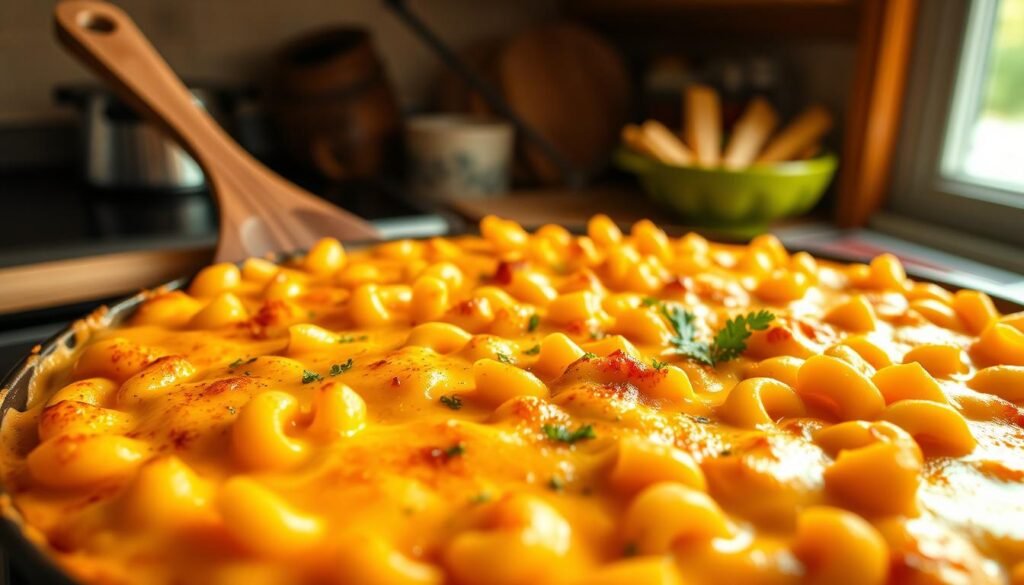
Boil the pasta just al dente, then rinse under cold water to stop cooking. Toss the drained pasta with melted butter, a pinch of salt and pepper, and stir in a little shredded cheddar so every forkful starts flavored.
Layer half the pasta in a buttered baking dish, add a full blanket of Colby Jack and cheddar, then top with the remaining pasta. In a bowl, whisk 3 eggs with 2 cups whole milk until smooth and pale.
Pour the custard evenly so it seeps through all layers. Cover tightly with foil and bake in a 350°F oven for 25–35 minutes, until edges bubble while the center remains slightly jiggly.
Remove foil, scatter extra cheddar on top, and broil briefly until the top melts and turns golden. Let the dish cool a few minutes so slices hold their shape before serving.
- We cool pasta first to prevent scrambled eggs when the custard hits warm noodles.
- Layering like lasagna ensures even distribution of cheese and pasta.
- Covering retains moisture for a creamy interior and set edges.
| Step | Timing | Result |
|---|---|---|
| Bake covered | 25–35 minutes | Set, slightly jiggly center |
| Broil top | 1–3 minutes | Golden, melted top |
| Rest | 5–10 minutes | Slices hold shape |
Topping options: crunchy crumbs or extra-cheesy crust
A topping can add crunch, seal in steam, or create a dramatic cheese pull at the table.
For a golden crunch, mix 2/3 cup panko with 2 Tbsp melted unsalted butter and 1/4 tsp salt. Sprinkle this crumb mix over the pasta before baking. The crumbs brown in about 15–25 minutes and give a crisp finish that contrasts the creamy interior.
Alternatively, reserve 2 cups shredded cheese for an all-cheese top. Scatter the blend—cheddar mixed with mozzarella works well—then bake the dish until set. Broil 2–3 minutes if you want deeper color. An all-cheese cap traps steam and keeps the interior gooey.
- Crumb topping: best on roux-style casseroles for a crunchy contrast.
- Cheese-only lid: kid-friendly and great for stretch and moisture retention.
- Mix cheddar with mozzarella on top for browning plus dramatic melt.
| Option | Amount | Result |
|---|---|---|
| Panko crumbs | 2/3 cup + 2 Tbsp melted unsalted butter | Golden, crisp top in 15–25 min |
| All-cheese | 2 cups shredded (cheddar + mozzarella) | Seals moisture; gooey, stretchy finish |
| Broil finish | 2–3 minutes optional | Deeper color without long baking |
Cheese choices, blends, and pro tips for the best texture
Good melting behavior and balanced flavor start with selecting cheeses that work together under heat. We focus on melt, salt level, and the fat content so the final bake is glossy and rich.
Why we grate our own cheese for a smoother sauce
We grate cheese fresh because pre-shredded mixes include anti-caking powders that can make a sauce grainy. Freshly grated curds melt faster and create a silkier cheese sauce.
Balancing flavor and melt with classic blends
Our go-to blend pairs Gruyere for nutty melt with sharp cheddar for tang and mozzarella for stretch. We fold in Colby Jack when we want mellow creaminess and add pepper jack for a mild kick.
- We taste the blend and adjust salt based on cheese salinity so the dish isn’t overseasoned.
- Keep the sauce slightly saucy before baking; the casserole will absorb liquid as it rests.
- Portion cheese across the sauce, layers, and a reserved topping—this gives depth and a finish that browns well.
| Cheese | Role | Use |
|---|---|---|
| Gruyere | Melt + nutty depth | Primary melting cheese |
| Sharp cheddar | Tang and backbone | Flavor driver |
| Mozzarella | Stretch, lower salt | Top or blend |
Timing, temperatures, and doneness cues
Timing and temperature control are what keep a pasta bake glossy and comforting rather than dry and tight.

We set the oven at 350°F for both methods. For a roux-based pan, plan about 25 minutes and watch closely between 20 and 25 minutes. Pull the dish when the top is lightly golden and the sauce still looks glossy.
For the custard approach, bake covered 25–35 minutes. Look for bubbling at the edges and a center that is slightly jiggly. Uncover and broil briefly with cheese on top for color.
Avoid overbaking so the sauce stays glossy, not dry
- Check visual cues: bubbling edges, a shiny sauce that coats the pasta, and no dry patches on the top.
- Rest the casserole a few minutes so the custard sets or the roux-based sauce stabilizes before serving.
- If the sauce looks too thick before baking, stir in a splash of milk or reserved pasta water to loosen it.
| Method | Temp | Minutes | Doneness cue |
|---|---|---|---|
| Roux-based | 350°F | ~25 | Lightly golden top; glossy sauce |
| Custard | 350°F | 25–35 | Edges bubbling; center slightly jiggly |
Serving ideas, sides, and when to make it
We often plan menus around this creamy favorite because it pairs easily with a wide range of mains and sides. It works as a cozy main or as a crowd-pleasing accompaniment for holiday spreads and casual get-togethers.
Weeknight dinners through holiday feasts
As a main, serve the casserole with a crisp salad or roasted broccoli, carrots, or green beans for a balanced plate. The contrast brightens the richness of the cheese and keeps the meal from feeling too heavy.
- As a side, pair it with roast turkey, prime rib, pork loin, steak, baked chicken breast, or BBQ chicken.
- Place it on Thanksgiving or Christmas menus and at potlucks — it reliably pleases a crowd.
- Season thoughtfully: let the cheese lead while salt and pepper support the other mains on the table.
- Portion for service: custard-style pans cut into small squares; roux-style pans served in generous spoonfuls.
| Use | Best pairings | Portioning |
|---|---|---|
| Main | Roasted vegetables, salad | Plated servings |
| Side | Turkey, prime rib, pork, BBQ chicken | Smaller buffet squares |
| Holiday | Large roasts, family-style spreads | Generous portions for guests |
Try this recipe as the centerpiece or a supporting dish; it adapts well and helps tie a menu together.
Make-ahead, reheating, and storage so leftovers shine
Storing and reheating properly keeps texture and flavor close to fresh from the oven. We assemble ahead when schedules are tight, then cool the dish before covering and chilling.
Assemble ahead, refrigerate or freeze, then bake to serve
We prep the casserole, let it cool, cover tightly, and refrigerate up to 48 hours. When baking from cold, add 10–15 minutes so the center heats through without drying the top.
For longer storage, freeze a tightly wrapped pan for up to 3 months. Thaw overnight in the fridge before returning the dish to the oven.
Reheat tips: microwave to warm, broil or spray to re-crisp the top
- Microwave portions until hot, then finish under the broiler for 1–3 minutes to restore a golden crust.
- For roux-style pans, keep 1/2 cup reserved pasta water or a splash of milk or cream on hand to loosen any sauce that tightened during storage.
- Spray the surface lightly with oil or add a little extra cheese before broiling for a crisp, flavorful top.
- Store leftovers in airtight containers in the refrigerator for 4–5 days for best quality and safety.
| Storage | Time | Notes |
|---|---|---|
| Refrigerator | Up to 48 hours | Add 10–15 minutes when baking from cold |
| Freezer | Up to 3 months | Thaw overnight in fridge before baking |
| Leftovers | 4–5 days refrigerated | Microwave, then broil to re-crisp |
Ready to bake a pan we’ll all crave again
We wrap this recipe with a clear choice: go roux for a silky, spoonable sauce and bake about 25 minutes, or choose custard for a sliceable classic and bake covered 25–35 minutes, then broil briefly.
Top the pan with buttery panko for crunch or an all-cheese lid for ooze. Grate your cheese fresh and keep an eye on bake time so the sauce stays glossy, not dry.
Plan ahead: assemble and refrigerate up to 48 hours, then reheat and broil to refresh the surface. Season simply with salt and pepper, and finish with a touch of butter and sharp cheddar when serving.
Pick your texture, follow the steps, and enjoy a macaroni cheese dish that fits weeknights, potlucks, or holiday tables. We serve it hot and watch it disappear.